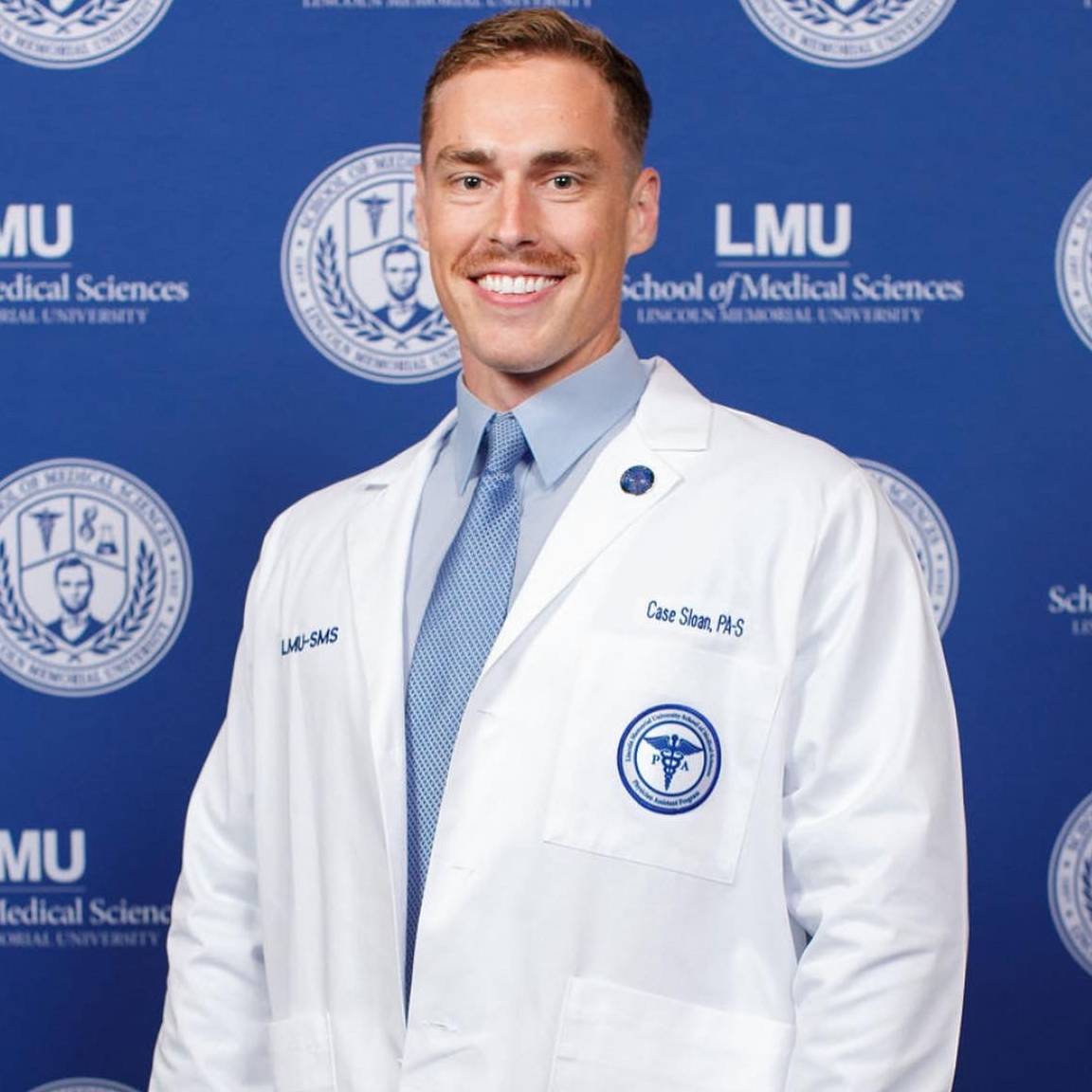
Dedicated and compassionate Physician Assistant Student who is highly motivated to conduct thorough patient assessments, diagnose medical conditions, and implement effective treatment plans. Proficient in performing during high stress situations due to my military background in the medical field. Strong ability to communicate with patients, families, and medical staff to ensure comprehensive and personalized care. Adept at managing medical records and maintaining a high level of accuracy and confidentiality. Seeking to leverage my expertise and passion for patient care in a dynamic healthcare environment.

Hi, I’m
CASE SLOAN
Physician Assistant
Nashville,TN
Summary
Work History
United States ArmySmyrna, TN
Medical Operations Officer
08.2016 - Current
Job overview
- Planned the health service support for over 2300 Soldiers while deployed in the middle east.
- Coordinated medical support, policies, procedures, and plans for 13 different companies.
- Coordinated patient care and evacuation for over 2300 Soldiers.
- Tracked and monitored immunizations, labs, dental, vision, injuries, and health exams for over 2300 Soldiers in supervision of healthcare providers.
- Worked directly with one physician, and three physician assistants operating in a health clinic we established.
- Defined medical and administrative best practices by writing policies and procedures amid a global pandemic.
- Maintained compliance with local and federal requirements by tracking education and certifications for 34 medics, one physician, and three physician assistants.
Quality Care Home Health - Lebanon, United States
Certified Nurse Assistant (CNA)
06.2016 - 01.2017
Job overview
- Created a personal relationship with physicians, physician assistants, nurse practitioners, nurses, pharmacist, and other medical professionals I worked alongside the nurses performing many different tasks.
- I cared for the patients of the facility making sure that their health is maintained and brought back to a stable condition.
- Maintained accurate records of patient care, condition, progress and concerns.
Kroger Pharmacy - Lebanon, United States
Pharmacy Technician
05.2016 - 01.2017
Job overview
- I communicated with physicians, physician assistants, and nurse practitioners about their prescribed medications daily as a pharmacy technician.
- Assisted pharmacist by filling prescriptions for customers and responding to patient questions regarding prescription and medication-specific issues.
- Displayed patient-oriented and comprehensive clinical pharmacy services and pharmaceutical care.
- I work directly with the pharmacist and patients.
Education
Carson-Newman UniversityJefferson City, TN
Bachelor of Arts from Biology, Military Science
08.2012
University Overview
Lettered in Football Freshman and Sophomore year of college (Freshman year we were eighth in the nation in Division II). Participated in R.O.T.C. all four years, and commissioned as a Army Officer at the completion of undergrad.
Lincoln Memorial UniversityKnoxville, TN
Masters of Medical Science from Physician Assistant
09.2021 - 12.2023
University Overview
- Relevant Coursework: Core Rotations in Emergency Medicine, General Surgery, Orthopedics, Family Medicine, Internal Medicine, Primary Care, OB/GYN, Pediatrics, Behavioral Health. Elective Rotations in Urgent Care and Interventional Radiology
Skills
Imaging Interpretation: Proficient in interpreting X-rays, CT scans, and MRI results to aid in diagnosis and treatment decisions
Patient Education: Able to effectively communicate with patients, providing clear explanations of medical conditions, treatment plans, and post-operative care instructions
Emergency Triage: Proficient in rapidly assessing and prioritizing patient cases based on severity, ensuring timely treatment for critical conditions
Emergency Procedures: Competent in performing various emergency medical procedures, including intubation, CPR, wound suturing, and fracture stabilization
Patient Stabilization: Experienced in stabilizing critically ill patients, managing shock, administering life-saving medications, and providing initial trauma care
Team Collaboration: Effective communicator and team player, collaborating seamlessly with emergency room physicians, nurses, and support staff to optimize patient care
Advanced Life Support (ALS): Certified in ACLS (Advanced Cardiac Life Support) and PALS (Pediatric Advanced Life Support) protocols for managing cardiac and pediatric emergencies
Patient Advocacy: Committed to providing compassionate care, advocating for patients' needs, and ensuring their understanding of treatment plans and discharge instructions
Emergency Preparedness: Knowledgeable in disaster preparedness and response, ensuring readiness to handle mass casualty events and public health emergencies
Cultural Competence: Sensitivity to diverse patient populations and ability to provide culturally competent care, taking into account individual backgrounds and beliefs
Timeline
Lincoln Memorial University
Masters of Medical Science from Physician Assistant
09.2021 - 12.2023
Medical Operations Officer
United States Army
08.2016 - Current
Certified Nurse Assistant (CNA)
Quality Care Home Health - Lebanon
06.2016 - 01.2017
Pharmacy Technician
Kroger Pharmacy - Lebanon
05.2016 - 01.2017
Carson-Newman University
Bachelor of Arts from Biology, Military Science
08.2012