

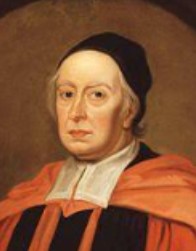
John Wallis
Ashford Kent England
Summary
My legacy stemmed from my influential positions, significant publications, and role as one of the most influential English mathematicians in history.
Overview
1
1
Certification
Work History
Private Chaplain
Sir Richard Darley at Buttercrambe, Yorkshire, 1640-1642
Private Chaplin
The Widow of Horatio, Lord Vere (Lady Mary Vere), at Castle Hedingham, Essex and in London 1642-1644
Cryptographer
Parliamentary Side of Civil War 1643-1660
Parliamentary Secretary
Assembly of Divines at Westminster 1644
Fellowship Position
Queen's College, Cambridge 1644-1645
I had to resign, however, due to marriage rules. I married my wife Susanna Glyde, who I was married to forty-two years until her death. We had two daughters and one son survive.
Savilian Chair of Geometry
Oxford 1649-Until Death 1703
I grew the most from this job. It forced me to immerse myself in the subject. I taught and lectured classical math text. This experience stimulated research, and I began to come up with new ideas and write my own publications.
- Introduced a number line with positive and negative numbers for operational purposes.
- Discovered the concept of momentum conservation, and coined the word momentum.
- Defended and supported the use of algebra in mathematics.
- Played significant role in the development of infinitesimal calculus. This influenced great future mathematicians like Newton and Leibniz.
- Introduced the mathematical symbol for infinity: ∞
Keeper of the University Archives.
Oxford 1657 - Until Death 1703
This was the longest tenure for that position.
Chief Cryptographer
Royal Court 1660-1689
Royal Chaplain
Following the Restoration of the Monarchy to King Charles II 1660-1689
Education
Early Education 1632 -
Martin Holbeach's School
Felsted, EssexBachelor of Arts 1637 -
Cambridge University
Masters of Arts 1640 -
Cambridge University
Doctor of Divinity 1654 -
Oxford Univeristy
Skills
- Good at pattern recognition and analysis Can easily spot patterns in complex mathematical problems
- Excelled at algebra and calculus foundations Studied and mastered algebra, and even developed methods for integration Worked a lot with infinity series which laid the groundwork for calculus
- Innovative with introduction of the infinity symbol (∞)
- Used negative numbers and concepts of complex numbers Expanded algebraic understanding and acceptance
- Applied mathematical principles to physical problems, and contributed to the theory of motion, the collision of bodies and centers of gravity
Languages
English
Latin
Greek
Hebrew
Accomplishments
- De Sectionibus Conicis (1655): First to treat conics algebraically as second-degree curves, making Descartes' methods accessible.
- Arithmetica Infinitorum (1656): Extended methods for finding areas under curves (quadrature), a crucial step towards calculus, containing the Wallis Product.
- Mathesis Universalis (1657): A compilation of lectures on algebra, arithmetic, and geometry, published with my inaugural address as Savilian Professor.
- Mechanica, sive Tractatus de Motu (1669–1671): A comprehensive treatise on motion, including principles of momentum conservation.
- Treatise of Algebra (1685): Applied algebraic techniques to infinitesimals and anticipated complex numbers, treating them as geometric concepts.
Other Notable Publications
- Grammatica linguae Anglicanae (1653): A significant work on English grammar. The book set the mold for English grammar in the 1700s.
- De loquela (1652): Explored speech, laying groundwork for teaching the deaf to speak.
- A Discourse of Gravity and Gravitation (1675): Addressed physical principles.
Affiliations
Royal Society
In the 1640s, in London, I became friendly with other men who were interested in natural philosophy. We met once a week to talk about advancements in medicine, mathematics, astronomy, physics, and chemistry. These meetings led to the foundation of the Royal Society, which was the world’s first national scientific institution.
Certification
- The John Wallis Academy in Ashford, Kent, is a school named in my honor.
- An asteroid was named after me, reflecting my enduring importance.
- The Wallis product, a famous formula in mathematics for Pi is named after me.
- I am credited with the number line and the infinity symbol (∞).
Interests
- Mathematics
- Cryptography
- Language
- Physic and Mechanics
- Education
- Theology
- Foundational Science
Timeline
Private Chaplain
Sir Richard Darley at Buttercrambe, Yorkshire, 1640-1642
Private Chaplin
The Widow of Horatio, Lord Vere (Lady Mary Vere), at Castle Hedingham, Essex and in London 1642-1644
Cryptographer
Parliamentary Side of Civil War 1643-1660
Parliamentary Secretary
Assembly of Divines at Westminster 1644
Fellowship Position
Queen's College, Cambridge 1644-1645
Savilian Chair of Geometry
Oxford 1649-Until Death 1703
Keeper of the University Archives.
Oxford 1657 - Until Death 1703
Chief Cryptographer
Royal Court 1660-1689
Royal Chaplain
Following the Restoration of the Monarchy to King Charles II 1660-1689
Early Education 1632 -
Martin Holbeach's School
Bachelor of Arts 1637 -
Cambridge University
Masters of Arts 1640 -
Cambridge University
Doctor of Divinity 1654 -
Oxford Univeristy