
Loise Sarfo
University Graduate
Blacksburg,VA
Work Preference
Summary
Motivated student currently working towards masters in Fish and Wildlife Conservation. Adept at prepping resources, equipment, and materials for research. Extensive background in investigating fish and water conservation research. Detail-oriented Research Assistant with hands-on experience performing clerical and laboratory work to advance research goals. Drives team success with expertise in data review, reporting and specimen handling. Specializes in Natural Resources Management with Fisheries and Water Resources as Major. Dedicated professional skillful in sample collection, data recording and instrument calibration. Resourceful and adaptable individual with extensive experience developing and conducting experiments to document results for studies. Comfortable handling complex issues, meeting strict deadlines and adjusting to rapidly changing conditions.
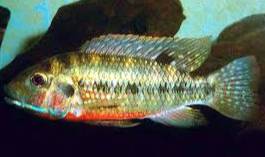
Research Interests: My overarching research interest lies in the conservation of freshwater fishes, particularly native and endemic cichlids of West Africa that are increasingly threatened by habitat degradation, pollution, and overexploitation. I am deeply motivated by the belief that aquaculture, when sustainably designed, can serve as a dual tool for species conservation and food security. By promoting the cultivation of locally adapted fish species, aquaculture can reduce fishing pressure on wild populations while enhancing rural livelihoods and nutritional resilience in sub-Saharan Africa. Building on this vision, my undergraduate research examined the Impacts of Artisanal Small-Scale Mining on Riparian Forest and Water Quality in the Offin and Oda River Watersheds in Ghana, where I documented heavy-metal contamination and habitat loss that threaten aquatic biodiversity. This experience deepened my commitment to exploring applied conservation through aquaculture. My current research, titled Comparative Performance of tilapia species (Oreochromis niloticus and Coptodon discolor) as Aquaculture Species, seeks to evaluate the growth, feed efficiency, and ecological adaptability of these two cichlids. While O. niloticus is globally dominant in aquaculture, the native C. discolor may offer comparable productivity with lower ecological risks. By analyzing their performance through the lens of the Metabolic Theory of Ecology (MTE), this study aims to identify species-specific advantages that support sustainable aquaculture development and biodiversity conservation. Ultimately, my goal is to integrate ecological theory with practical aquaculture to advance both conservation and food-system resilience in Africa.
Overview
4
4
years of professional experience
7
7
Years of post-tertiary education
3
3
Languages
Work History
Graduate Teaching Assistant
Virginia Tech
Blacksburg, VA
08.2025 - Current
1. Assisted in teaching undergraduate courses in fisheries, wildlife, and environmental sciences by supporting lectures, laboratories, and field-based activities.
2. Graded assignments, reports, and exams, providing constructive and timely feedback to support student learning and academic development.
3. Facilitated in-class activities, discussions, and group exercises to reinforce course concepts and improve student engagement.
4. Supported students with research design, data interpretation, and scientific writing through office hours and one-on one guidance.
5. Assisted with course organization, learning management systems (Canvas), and instructional materials preparation.
6. Maintained professional communication with faculty, staff, and students to ensure smooth course delivery.
7. Developed experience in academic mentoring, assessment, and instructional support within a U.S. university setting.
Research and Development Assistant Manager
Consulting In Aquatic Research And Training For Development (CART4-D)
Kumasi, Ashanti
10.2023 - 07.2025
1. Completed a 3-month industrial attachment internship, contributing to applied aquaculture and aquatic research projects, including the design and implementation of a pilot-scale aquaponics system integrating fish and plant production.
2. Served as a Research Assistant for 15 months, supporting experimental aquaculture studies, environmental monitoring, and data-driven research initiatives.
3. Appointed Acting Manager for 7 months following managerial transition, overseeing laboratory operations, coordinating research activities, and supporting project delivery.
4. Led field sampling, laboratory analysis, and GIS-based assessments of mining-related impacts on river water quality, including heavy metal contamination and riparian forest degradation.
5. Collaborated with scientists, farm managers, and industry partners on aquafeed performance trials for Oreochromis niloticus and Clarias spp., from hatchery stages to table-size production.
6. Conducted fish handling, biometric sampling, disease control, harvesting, and husbandry practices across multiple aquaculture systems.
7. Performed surface water sampling and routine water quality monitoring (e.g., temperature, dissolved oxygen, pH) in both field and aquaculture facility settings.
8. Supported post-harvest handling and processing of fish products for human consumption, following food safety and quality protocols.
9. Assisted with plankton sampling and aquatic ecological assessments to support experimental and environmental studies.
10. Compiled, managed, and organized datasets for statistical, qualitative, and quantitative analyses, primarily using Microsoft Excel.
11. Developed and coordinated project plans and timelines in collaboration with multidisciplinary research teams.
12. Managed laboratory space, equipment, and consumables, ensuring safe and efficient research operations.
13. Worked effectively both independently and as part of collaborative research teams across academic and applied projects.
Intern, GIS Department
Kumasi Regional Forestry Commission
Kumasi
06.2022 - 08.2022
- Explored new technologies and approaches to streamline processes.
- Interacted with customers by phone, email, or in-person to provide information.
- Collaborated with senior management on new initiatives to build confidence.
- Learnt how to create maps, shapefiles, quadrats and pick coordinates.
- Explored in remote sensing, Land Use Land Cover Change, Arc GIS and Google Earth to acquire new techniques.
- Assisted in activities of Green Ghana project.
- Participated in nursery activities and identification of trees and wildlife.
Education
Master of Science - Fisheries And Wildlife Sciences
Virginia Tech
Blacksburg, VA 08.2025 - Current
Bachelor of Science - Natural Resources Management
University of Energy And Natural Resources
Sunyani, Ghana 09.2019 - 10.2023
High School Diploma -
Kofi Agyei Senior High
Kumasi, Ghana 08.2016 - 06.2019
Skills
Data Entry
Fish Handling
Qualitative and Quantitative Analysis
Microsoft Software Proficiency (Word and Excel)
Excellent Communication
Google Earth
Fisheries Extension Skills
Water quality monitoring
Extension skills
Fish handling, sampling and harvesting
Water Quality measurement (All water quality parameters)
Workable knowledge of GIS and Remote Sensing
Leadership, teamwork and collaboration
Plankton and water sampling
Knowledge about nature and conservation
GIS & Remote Sensing
Plankton sampling
Fish disease control
Fish tank conditioning and water treatment
Post-harvest handling and processing of fish
Laboratory management
Critical thinking
Statistical (R and JMP)
References
DR. PETER SANFUL
Senior Lecturer Director,
Centre for Grants, Research and Innovation (CeGRI)
Department of Fisheries and Water Resources
School of Natural Resources
University of Energy and Natural Resources, Sunyani.
peter.sanful@uenr.edu.gh
+233244955821
PROF. EMMANUEL ANOKYE FRIMPONG
Graduate Director, Professor,
Department of Fish and Wildlife Conservation
Virginia Polytechnic Institute, Blacksburg
frimp@vt.edu
+13052241968
Timeline
Graduate Teaching Assistant
Virginia Tech
08.2025 - Current
Master of Science - Fisheries And Wildlife Sciences
Virginia Tech
08.2025 - Current
Research and Development Assistant Manager
Consulting In Aquatic Research And Training For Development (CART4-D)
10.2023 - 07.2025
Intern, GIS Department
Kumasi Regional Forestry Commission
06.2022 - 08.2022
Bachelor of Science - Natural Resources Management
University of Energy And Natural Resources
09.2019 - 10.2023
High School Diploma -
Kofi Agyei Senior High
08.2016 - 06.2019