

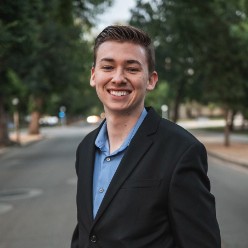
Sean McGinty
Davis,Yolo
Summary
Highly motivated Genetics Ph.D. candidate with an interest in comparative genomics, bioinformatics, and long-read sequencing.
Overview
14
14
years of post-secondary education
Education
Doctor of Philosophy - Integrative Genetics and Genomics
UC Davis
Davis 2021.09 - 2027.06
Master of Science - Integrative Genetics and Genomics
University of California, Davis
Davis 2021.09 - 2026.03
Bachelor of Science - Major: Genetics And Genomics Minor: Statistics
University of California Davis
Davis 2017.09 - 2021.06
Skills
- R/R Studio
- Python
- Unix/BASH
- SLURM
- Tutoring/Teaching
- LaTex
- Statistician
- Working on a High Performance Computing (HPC) cluster
- Sequencing Data
- Variant Calling
- Hi-C data processing
Appointments/Positions
- 2021–Present — Graduate Student Researcher, Dennis Lab, University of California, Davis
- 2023–Present — Teaching Assistant, First-Year Seminar: Navigating a Genome—Exploring What Makes Us Uniquely Human, University of California, Davis
- 2022–2023 — Teaching Assistant, BIS 101: Genes and Gene Expression, University of California, Davis
- 2021–Present — Member, Human Genomics Focus Group, University of California, Davis
- 2021–Present — Member, Epigenomics Focus Group, University of California, Davis
- 2019–2021 — Undergraduate Research Intern, Ross-Ibarra Lab, University of California, Davis
- 2019–2021 — Peer Tutor, Statistics and Genetics, University of California, Davis
Publications
- McGinty, Sean P., Gulhan Kaya, Sheina B. Sim, et al. 2025. “CiFi: Accurate Long-Read Chromosome Conformation Capture with Low-Input Requirements.” Nature Communications 17 (1). https://doi.org/10.1038/s41467-025-66918-y.
- Shew, Colin J., Gulhan Kaya, Sean P. McGinty, and Megan Y. Dennis. 2026. “Influence of Cis-Regulatory Elements on Expression Divergence in Human Segmental Duplications.” Genome Research, June 16, –.
- Soto, Daniela C., José M. Uribe-Salazar, Colin J. Shew, Aarthi Sekar, Sean P. McGinty, and Megan Y. Dennis. 2023. “Genomic Structural Variation: A Complex but Important Driver of Human Evolution.” American Journal of Biological Anthropology 181 (S76): 118–144.
- Heath, Nicholas G., J. Antonio Gomez, Sean P. McGinty, Henriette O’Geen, and David J. Segal. 2025. “A Split Luciferase Biosensing Platform for Detection and Imaging of Chromatin Loops in Individual Live Cells.” Nucleic Acids Research 53 (22). https://doi.org/10.1093/nar/gkaf1324.
- Tittes, Silas, Anne Lorant, Sean P. McGinty, et al. 2025. “The Population Genetics of Convergent Adaptation in Maize and Teosinte Is Not Locally Restricted.” eLife 12 (RP92405). https://doi.org/10.7554/elife.92405.
Ad-Hoc Reviewer
- Molecular Biology and Evolution (2026)
- Cell (2025)
Honors
- 2026 — Selected Participant and Speaker, International Student Workshop (ISW), Nara Institute of Science and Technology, Nara, Japan
- 2024–2025 — F Award Writing Workshop, University of California, Davis
- 2021–2022 — Dean's Distinguished Graduate Fellowship, University of California, Davis
- 2019–2021 — Member, Phi Beta Kappa Honor Society, University of California, Davis
- 2021 UC Davis College of Biological Sciences Department Citation
- 2017–2020 — Dean's Honor List, College of Biological Sciences, University of California, Davis
Conferences/Presentations
- 03/24 — Human Genomics Focus Group, UC Davis (Talk): Gene expression diversity across human structural haplotypes at chromosome 15q13.3
- 05/24 — CSHL Biology of Genomes (Poster): Gene expression diversity across human structural haplotypes at chromosome 15q13.3
- 05/24 — Long-Read Sequencing Workshop at JAX (Poster): Gene expression diversity across human structural haplotypes at chromosome 15q13.3
- 05/24 — Long-Read Sequencing Workshop at JAX (Moderator, Genome Structure session)
- 09/24 — Telomere-to-Telomere Face-to-Face Meeting, UC Santa Cruz (Flash Talk): CiFi: Accurate long-read chromatin conformation capture with low input requirements
- 11/24 — Human Genomics Symposium, UC Davis (Poster): Gene expression diversity across human structural haplotypes at chromosome 15q13.3
- 03/25 — Interplay of Chromatin Architecture and Transcription Regulation, Fairmont Banff Springs, Banff, AB, Canada (Poster): CiFi: Accurate long-read chromatin conformation capture with low-input requirements allows analysis of complex genomic regions
- 04/25 — Epigenomics Focus Group, UC Davis (Talk): CiFi: Accurate long-read chromatin conformation capture with low-input requirements allows analysis of complex genomic regions
- 05/25 — Krebs Symposium, UC Davis (Poster): CiFi: Accurate long-read chromatin conformation capture with low-input requirements allows analysis of complex genomic regions
- 07/25 — Arima Genomics Webinar: Small Samples, Big Insights: Capturing Chromatin Architecture with CiFi
- 04/26 — Epigenomics Focus Group, UC Davis (Talk): Interrogating gene regulation and chromatin interactions across genomic hotspots in primates
Contributions to Science
Undergraduate Research
As part of my undergraduate research, I worked with Dr. Jeffrey Ross-Ibarra studying the mechanisms by which linked selection shapes the diversity landscape in natural populations of maize and its wild ancestor teosinte. Some of our goals included estimating neutral diversity to identify genomic regions with high linked selection, as well as assessing how linked selection was contributing to within-species differences in chromosomal patterns. To address these, we generated a model taking in both the effects of background selection and those of recurrent hitchhiking to predict nucleotide diversity. We also estimated the distribution of fitness effects of new mutations for these populations. Using these estimates, we modelled the impacts of selection at functional sites on patterns of diversity genome-wide. We then compared our models to data from whole-genome sequencing of 11 populations of maize and teosinte and investigated the impact of inbreeding and demography on the explanatory power of our models. Models were then fit using a maximum likelihood framework. We were able to successfully demonstrate that linked selection does in fact lead to decreased genomic diversity across maize and teosinte genomes.
Graduate Research
My ongoing predoctoral research is focused on primate genomic structural variation (SV)—specifically how structural variation can lead to phenotypic change via disrupted gene regulation. Largely due to difficulties in discovering structural variants (SVs) from short-read sequencing data (e.g., Illumina), the total extent by which SVs impact the organization of chromatin and lead to subsequent changes in gene is still unknown. Technological advances in computational approaches along with the rise of population level long-read sequencing have enabled us to perform an in-depth characterization of structural variation. I am also in the process of developing a method for long-read Hi-C called CiFi that will allow us to query chromatin conformation across repetitive regions of the genome. Ultimately, my research will characterize SV alterations in chromatin organization contributing to (1) expression diversity across modern humans; and (2) regulatory divergence between humans and chimpanzee primate species. The data generated from this work will fulfil the unmet need to characterize SVs across primate genomes and to connect them with traits, diseases, impacts on gene regulation, and the evolution of these features in humans. This work will result in three first author papers with the first being a publication of our long-read PacBio Hi-C method, CiFi. This manuscript is currently published at Nat Comm. I also plan to release another first author paper in a year where I characterize the effects of structural variation on gene regulation in modern humans. My third and final first author paper will be an application of CiFi where we use it to characterize alterations in chromatin contacts resulting from SVs between primate species. This work will culminate in an exit seminar at the end of my graduate studies.
Outreach
Outreach: First Year Seminar
In the previous 4 spring quarters (2023, 2024, 2025, 2026) Megan Dennis and I have offered a UC Davis Undergraduate First Year Seminar (FYS) Course-based research experience (CURE) entitled "Navigating a genome: exploring what makes us uniquely human". The course was enrolled with a maximum of 15 students. A human duplicated gene was assigned to five groups comprising three students. Groups used both experimental and computational approaches to characterize functions. Again, we incorporated two additional hands-on research experiences, including a new module using restriction enzymes to perform SNP genotyping. The course was collaboratively organized and taught by Dr. Megan Dennis and I. A total of 3 former FYS student have joined our lab as teaching assistants. A survey querying students’ understanding of “what is a genome assembly” showed improvement of understanding with 7% correctly answering in week one of the course versus 86% at week ten. Further, an anonymous survey completed by 53% of students indicated that a majority found the course changed their views of science in a positive light.
Outreach: Sacramento Charter H.S
Over the past three years (2024, 2025, and 2026), partnered with the UC Davis School of Medicine (SOM) Department of Biochemistry and Molecular Medicine and Sacramento Charter H.S., I have organized the Dennis lab to host a hands-on workshop with ~ 100 students over the course of a day. During this experience we teach about DNA, genetics, and forensics in a "Who-Did-It?" murder mystery. Students gain hands-on experience using a pipette, performing a restriction enzyme digest, and running a gel. Students and teachers at Sacramento Charter H.S. were enthusiastic about the partnership and several are pursuing degrees in STEM, including nursing and forensics science.
Outreach: Mentoring
I have mentored 2 undergraduate researchers in the Dennis Lab, Louie Pinpin and Adeena Rahman. Each of these students' projects culminated in multiple posters at the UC Davis Undergraduate Research symposium in March 2025 with posters titled:
- Inversion-mediated Differential Expression of CHRNA7at Human Chromosome 15q13.3
- Investigating the impact of 15q13.3 inversions on gene regulation
- Assessing changes in gene regulation associated with chromosome 15q13.3 deletion
Further, Mr. Pinpin graduated in June 2024 and was accepted into the Stanford University REACH postbac program (https://postbacs.stanford.edu/), which he started this past summer in the laboratory of Dr. William Goodyer. Undergraduate student Adeena Rahman will graduate this spring with plans to be a junior specialist before applying to medical school.
Timeline
Doctor of Philosophy - Integrative Genetics and Genomics
UC Davis
2021.09 - 2027.06
Master of Science - Integrative Genetics and Genomics
University of California, Davis
2021.09 - 2026.03
Bachelor of Science - Major: Genetics And Genomics Minor: Statistics
University of California Davis
2017.09 - 2021.06