

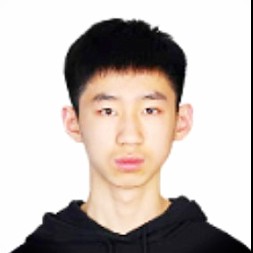
Yifei Wang
Madison
Summary
Experienced in developing scalable backend systems using Java, Spring Boot, and distributed architectures, alongside building deep learning models (CNN, GPT) using Python and PyTorch. Skilled in integrating data-driven models into real-world systems and solving complex problems through a combination of software engineering and machine learning techniques.
Overview
2
2
years of professional experience
Work History
Backend Developer Intern
YanYue Cloud Prevention
07.2024 - 10.2025
• Built backend modules using Java, Spring Boot, Redis and Spring Security, supporting role-based access control for different user levels (administrators, inspectors, and enterprise users)
• Addressed the challenge of translating complex government policies (e.g., digital enforcement and electronic evidence requirements) into actionable system specifications for software development
• Designed and contributed to an integrated enforcement platform connecting management, enforcement officers, and enterprise users, resolving interoperability challenges and significantly improving enforcement efficiency through online workflow management, real-time information sharing, and standardized result verification.
• Designed and implemented database schemas and approval workflows to support enforcement planning, review, and execution processes
• Utilized Redis and Node.js to support system performance and asynchronous processing in a distributed architecture
• Collaborated on defining system functionality and technical stack based on real-world enforcement requirements and policy constraints
AI Algorithm Project
University of Wisconsin–Madison
02.2026 - 04.2026
• Implemented A* search algorithm to solve the 8-tile puzzle with efficient state-space exploration
• Designed heuristic functions (Manhattan, Euclidean) and compared their performance on search efficiency
• Reduced node expansions and improved runtime by selecting optimal heuristics
• Managed priority queue operations (heapq) to maintain O(log n) insertion and retrieval efficiency
• Evaluated performance using metrics such as nodes expanded, solution depth, and maximum queue size
Computer Vision Research Assistant
Microwave Photonics Research Laboratory in NUAA(Nanjing University of Aeronautics and Astronautics)
06.2025 - 08.2025
• Using ML to implement automated boundary detection and iterative refinement to accurately crop objects from multi-object and cluttered scenes
• Addressed the challenge of overlapping and ghosting effects in multi-angle radar imaging, where multiple objects and rotations make target identification difficult
• Built a YOLO-based computer vision pipeline to automatically detect object contours from radar cross-section (RCS) images and separate targets from complex backgrounds
• Processed radar return data to isolate single-object images under occlusion and multi-view conditions, enabling more reliable downstream recognition
• Developed contour-based extraction methods beyond standard bounding boxes, allowing precise segmentation of irregular object shapes
• Reduced noise and irrelevant artifacts (e.g., small bright spots and interference) through image preprocessing and edge detection techniques
• Improved recognition quality by generating clean, contour-based object representations for further classification tasks
Machine Learning / Deep Learning Project
University of Wisconsin–Madison
01.2026 - 05.2026
• Trained CNN models achieving ~80–90% validation accuracy on image classification tasks
• Built and trained deep learning models for computer vision and NLP tasks using PyTorch on datasets with thousands of samples
• Implemented a LeNet-5 CNN for image classification, achieving stable convergence and improved accuracy through hyperparameter tuning
• Trained a character-level GPT model (nanoGPT) on large text corpora (>100K tokens) for sequence generation
• Fine-tuned DistilGPT2 and improved generation quality through decoding strategies (temperature, top-p sampling)
Education
Bachelor of Science - Computer & Data Science
University of Wisconsin, Madison
Madison, WI06-2026
Skills
- Languages: Python, Java, SQL, R, C
- Machine Learning: Regression, K-Means, Hierarchical Clustering, Naive Bayes, Feature Engineering, Model Evaluation
- Deep Learning: CNN (LeNet-5), PyTorch, Transformer, GPT (nanoGPT, DistilGPT2), Hyperparameter Tuning
- Algorithms: A* Search, Heuristic Design (Manhattan, Euclidean), State Space Search, Data Structures
- Backend: Spring Boot, Spring Security, REST APIs, MySQL / Dameng Database
- NetWorking&System: TCP/IP, HTTP, DNS, UDP, Socket Programming, Client-Server Communication, OS Fundamentals (Processes, Memory Management, CPU), Networking Stack, Distributed Systems: CAP Theorem, Consistency Models, Basic Consensus Concepts, Load Balancing
- Tools & Libraries: Pandas, NumPy, Scikit-learn, Matplotlib
- Systems: Linux, Docker, Kubernetes, Cloud native
Languages
English
Native or Bilingual
Chinese (Mandarin)
Native or Bilingual
Timeline
AI Algorithm Project
University of Wisconsin–Madison
02.2026 - 04.2026
Machine Learning / Deep Learning Project
University of Wisconsin–Madison
01.2026 - 05.2026
Computer Vision Research Assistant
Microwave Photonics Research Laboratory in NUAA(Nanjing University of Aeronautics and Astronautics)
06.2025 - 08.2025
Backend Developer Intern
YanYue Cloud Prevention
07.2024 - 10.2025
Bachelor of Science - Computer & Data Science
University of Wisconsin, Madison