
Hi, I’m
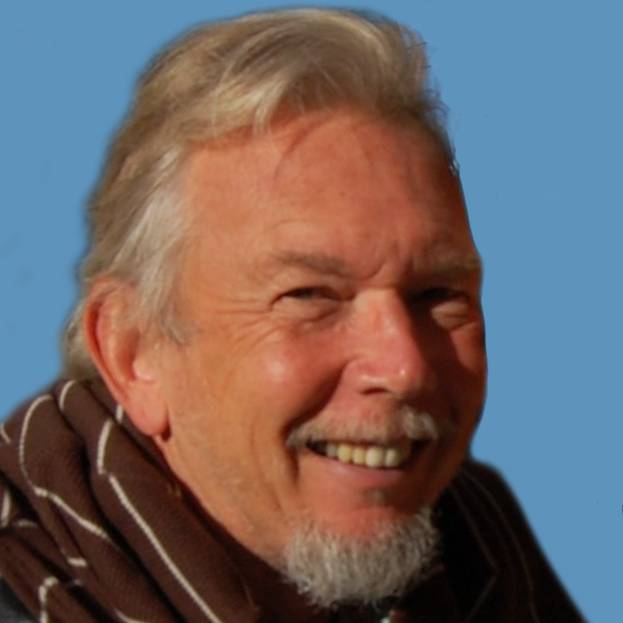
ANDRÉ P. WALTON
Coach, Innovation Consultant
Sparks,NV
Summary
Educated in the U.K., I graduated from high school with Advanced Level qualifications in math, the sciences, and electronics. I worked primarily as an electronics engineer until I landed a university job in medical physics, researching ways of measuring medical ultrasound. During my medical physics work I invented two medical ultrasound instruments that the university declined to commercialize, and that marked the beginning of my career as an entrepreneur.
Shortly after that I added a musical instrument microphone to my list of inventions and started a business to manufacture that range of products. The C-ducer microphone became well known among professional musicians and the piano version of the microphone became the go-to device for amplifying and recording piano. Exports grew to cover thirty countries and a U.S. subsidiary with thirty sales personnel helped sales grow at a 30%/annum pace.
After selling both music and medical businesses André became an export consultant before enrolling in the University of Nevada, Reno’s social psychology Ph.D. program, from which he graduated in 2005[1].
Already a scuba instructor and coach, education became one of André’s passions. He has taught for Girne American University, in Northern Cyprus, where he elevated to the position of Dean, the local community college where he taught sociology, entrepreneurship, marketing and management, and the University of Nevada, Reno, also teaching various management subjects at the Master’s Degree level.
André’s recreational time is spent hiking, biking, camping, playing tennis, and making music as a professional (jazz) flautist.
[1] ‘Dissertation subject: ‘Social influences on organizational creativity’
Overview
43
years of professional experience
3
years of post-secondary education
Work History
Visiting Professor of Creativity and Entrepreneurship
Current
Job overview
- University of South Wales, Newport Business School
- Delivery of guest lectures on entrepreneurship, creativity and marketing
- Supervision of Ph.D
- Students
- Designing executive development programs (now incorporated into the training schedules of many public and private corporations including Virgin Group, Lloyd's Bank, Welsh National Assembly (Government of Wales), The Smithsonian Institute and N.A.S.A.
Creative PathsReno, NV
Owner/Founder
01.2005 - Current
Job overview
- Innovation and creativity/business coach/consultant
- Design and implementation of executive growth programs promoting creative thinking and innovation management
- In depth leadership coaching to develop strategic planning and actionable strategies for organizational-level innovation
- Design and delivery of creativity and innovation workshops for idea generation and strategic planning
- Developing global and national marketing strategies
College of Business, University of Nevada RenoReno, NV
Lecturer
01.2019 - 01.2021
Job overview
Taught:
- International Marketing
- Management
- Managing with creativity
University of NevadaReno, NV
Master's Degree Program in Justice Management
01.2011 - 01.2021
Job overview
Design and instruction:
- Business Communications
- Managing with creativity
- Strategic planning
Truckee Meadows Community CollegeReno, NV
Instructor
01.2018 - 01.2021
Job overview
- Subjects taught:
- Marketing
- Entrepreneurship
- Management
- Sociology
Girne American UniversityGirne
Associate Professor, Dean of Humanities
01.2008 - 01.2010
Job overview
- Hired primarily to create a Master’s Degree program in Social Psychology
- Responsibilities also included undergraduate instruction in Sociology, Research methods, Statistics and Marketing
- Later, as Dean, Walton also sat on the university Graduate Committee
R.E.A.LLas Vegas, NV.
Executive and Founding Director
01.2004 - 01.2008
Job overview
- Walton was hired to create this program from the ground up, including insuring the corporation met 501(c)(3) requirements, hiring personnel, training docents for court tours, and designing programs to help youth better understand the law and the court systems
- This included writing teacher workbooks and other materials for educators to use within Project R.E.A.L
- Programs as well as scripting a play that was filmed and syndicated nationally.
National Judicial College, L
Consultant
01.2004 - 01.2005
Job overview
- Creating a strategic plan for Project R.E.A
C.T. Group, Inc, T. Group, Ltd
Owner/founder/manager
01.1980 - 01.1999
Job overview
- Europe)
- C-T Group became a successful SME in three different markets: Audio equipment, Medical ultrasound equipment, and scientific measurement equipment
- Walton founded the organization and was president until its sale at which time the medical business had over 100 sales representatives and had become a significant member of the U.S
- Medical ultrasound market
- The music company distributed its products in over 60 countries throughout the world and the scientific instrument company had been endorsed by several national standards organizations
- The group manufactured in Europe (in the U.K.) with Walton as Chairman, and distributed both domestically and throughout Europe and North America, where it had headquarters in Boynton Beach, Florida.
Education
University of Nevada, RenoReno, NV
Ph.D. from Social Psychology
08.2002 - 05.2005
University Overview
"Social influences on organizational creativity."
Open University
BA (Hons) from General Science, Mathematics
National Judicial College
Certificate - Mediation/Alternate Dispute Resolution
AACT Coaching Certification
Skills
Design and delivery of Undergraduate and graduate-level distance learning and in-person classes on both Moodle and Canvas, specifically in the areas of Marketing, Communications, Management, Entrepreneurship and Strategic Planning
Executive/Upper Management Development programs on Creativity and innovation, Creative Problem Solving, and building the Innovative EnvironmentDesign and facilitation of Workshops for brainstorming, creative problem solving, and team buildingSurvey research design and implementationComputer skills in the areas of SPSS, Microsoft Office, Adobe Photoshop, After Effects, Illustrator
Video editingExecutive coachingAccomplishments
Presentations to
- Marconi Institute of Creativity, Bologna, Italy, which presentation was broadcast by the Italian Broadcasting Company. This presentation can be viewed at: https://www.youtube.com/watch?v=Gh3th9jNOm0 2008
- Facilitated workshop on Organizational Creativity to the Smithsonian Institute, Washington, D.C. and N.A.S.A.
- European Design Center Award
- The Daily Telegraph ‘Innovations for Industry’, award.
Additional Information
Teaching Philosophy
Accommodating for students for whom English is not their first language, or for whom the American culture is not their second nature, is vital in our diverse world. In my teaching, I put my philosophy regarding cultural inclusiveness into practice in several ways:
a) By incorporating material and techniques that cater to different learning styles. Specifically, I use the VARK approach: Visual, Auditory, Reading/writing, and Kinesthetic learning. For instance, rather than simply repeating key aspects of a particular topic verbally, I use different media to accommodate these different learning styles and reinforce important points.
b) I have students create small groups (typically of four or five students). Important topics from the class are discussed within these groups. This practice encourages the valuable phenomenon of peer learning, and also provides a smaller and more comfortable environment in which students can share their views.
c) I encourage students to take advantage of confidential ‘office time’ opportunities to discuss any problems they may have with the course material or other aspects of the classes.
d) I post videos on the class platform relating to key in the class. Videos may be TED Talk type presentations or videos that I have made to summarize key points from the classes.
e) I make it clear to every class that any kind of abusive or otherwise inappropriate behavior will not be tolerated.
In short, my classes are designed around the concepts of ensuring students:
a) Can freely express their opinions and who they are, what they believe in, and their life preferences.
b) Feel they can freely participate in all class-related activities, in and out of the classroom.
c) Feel safe from abuse, inappropriate humor or criticism, or harassment.