
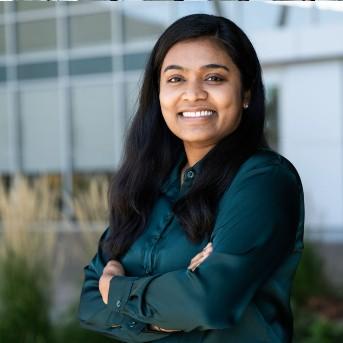
Pravalika Butreddy
Work Preference
Desired Job Title
Work Type
Location Preference
Location:
Open to relocation:
Materials Scientist and Process Development Researcher with over 6 years of experience in experimental design, materials processing, and process optimization. Specialized in wet chemistry, microfluidic device design, and high-throughput experimentation. Skilled in SEM/EDS, XRD, XPS, and other analytical techniques for material evaluation. Developed standard operating procedures and translated research into scalable improvements, holding a Ph.D. in Nanoscience with 14 publications.
Work History
- Evaluated AI-assisted materials characterization outputs through cross-validation with experimental data, ensuring scientific accuracy and reliability.
- Analyzed discrepancies between machine learning predictions and experimental measurements to improve data consistency and strengthen predictive models.
- Applied materials science expertise to interpret technical results, enhancing the validity of data-driven conclusions.
• Developed flow-gel separation device for magnesium extraction from seawater, achieving magnesium phase purity greater than 97%.
• Developed a pH-cycling approach for manganese extraction from ferromanganese nodules, achieving 65.7–74.2% recovery with 81.5–91.0 wt% purity.
• Studied boehmite particle aggregation through DLS, zeta potential measurements, in situ transmission electron microscopy, 3D atomic force microscopy, and molecular dynamics simulations, enhancing understanding of particle behavior.
• Designed and conducted robotics -assisted reaction-diffusion experiments across 96 experimental conditions to systematically evaluate process variables and material responses.
• Designed and executed independent experimental studies investigating material behavior, colloidal stability, particle aggregation, and solid-liquid interfacial phenomena.
• Applied Python-based image analysis, statistical approaches, and Bayesian neural networks to interpret experimental results and identify relationships between experimental conditions and material behavior.
• Troubleshoot experimental workflows and used quantitative characterization to investigate changes in material properties and improve experimental reproducibility.
• Prepared technical documentation, research reports, and scientific publications, effectively communicating findings and facilitating collaboration within multidisciplinary teams.
- Trained researchers and technical users in XRD, FTIR, and analytical procedures, enhancing data collection reliability.
- Guided users in measurement techniques and data interpretation, improving their analytical skills and research outcomes.
- Developed and updated standard operating procedures (SOPs) to improve instrument operation, consistency, and laboratory workflow.
- Troubleshot analytical instrumentation issues and supported equipment readiness for research and high-throughput experiments.
● Designed and synthesized lithium-based coordination polymer frameworks and metal-organic frameworks (MOFs) for solid-state lithium-ion electrolyte (SSEs) applications, clarifying relationships among composition, structure, porosity, thermal stability, and ionic conductivity to enhance material performance.
● Incorporated a highly cross-linked, silica-rich silsesquioxane network into a lithium-tannate polymer framework, improving ionic conductivity by approximately 10-fold to 10⁻⁴ S/cm.
● Developed porous lithium-tannate-silsesquioxane coordination polymer nanoparticles using base-catalyzed sol-gel polymerization with an organoalkoxysilane, producing particles in the 60-170 nm size range.
● Investigated multicomponent solid-state electrolyte formulations by incorporating lithium perchlorate and ethylene carbonate as a plasticizer and lithium-ion mediator, optimizing composition to achieve room-temperature ionic conductivities of approximately 10⁻⁵ S/cm.
● Synthesized three isoreticular lithium-based MOFs using a solvothermal process and evaluated their structural characteristics, morphology, thermal stability, and ionic transport properties, contributing to advancements in solid-state electrolyte research.
● Applied structural, compositional, morphological, thermal, and electrochemical characterization techniques to assess material performance and establish structure-property relationships, supporting the optimization of solid-state electrolyte formulations.
● Evaluated the thermal stability of synthesized polymer frameworks, demonstrating stability up to 250 °C for lithium-tannate frameworks and up to 500 °C for the investigated isoreticular Li-MOFs.
● Designed and executed systematic experiments to investigate the effects of composition and framework architecture on material properties, documenting results to support reproducibility and materials optimization.
- Conducted experimental studies on nanoparticle uptake and biodistribution, integrating analytical measurements and imaging to provide insights on material behavior.
- Developed and characterized copper oxide nanoprobes using SEM, XRD, FTIR, and ICP-MS, enhancing understanding of particle properties, composition, and environmental behavior.
- Maintained laboratory procedures and ensured compliance with good laboratory practice (GLP) standards, supporting reliable and reproducible experimental operations.
Education
Ph.D. - Nanoscience
GPA: 3.98
M.Tech. - Materials Science & Engineering
GPA: 3.7
B.Tech. - Mechanical Engineering
Skills
AWARDS & RECOGNITION
• National Postdoc Appreciation Honoree from Physical & Computational Sciences Directorate, PNNL | 2024
• Innovation award 2022 | Tech Connect Conference 2022| Recognized for contributions to bio-based solid-state lithium battery technology | June 2022
SELECTED PUBLICATIONS AND INNOVATION
● Co-author of 14 peer-reviewed papers in materials science, nanoscience, chemical separations and related fields.
● Published in journals including ACS Nano, Chemistry of Materials, Nanoscale, Chemosphere, ChemComm, APL Machine Learning, and RSC Sustainability
● Provisional patent application 63/689,958: “Flow-gel approach for chemical separations from liquid feedstocks”, 2023.
LEADERSHIP
- SENIC Advisory Board Member | The Joint School of Nanoscience & Nanoengineering | Mar 2021- Aug 2023
- Entrepreneurial Lead | NSF I-Corps, NanoClean Tech | May 2022- June 2022